









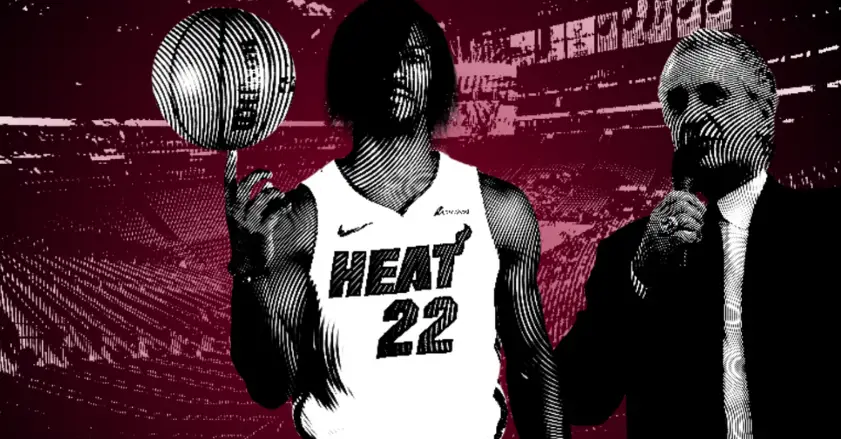
Jimmy Butler emo begins not with a box score or a highlight reel, but with a photograph that looked like it escaped from an early-2000s MySpace page. The hair—long, straightened, draped across one eye. The face—expressionless, almost mournful. The posture—leaning into irony so hard it felt like sincerity. When the image surfaced on NBA Media Day in 2023, the internet paused, then laughed, then argued, and finally—almost reluctantly—looked inward.
It was funny. It was absurd. But it was also unsettling in a way pop-culture moments rarely are. Because beneath the joke lived something real: a professional athlete using parody to gesture at pain, identity, and the strange performance of masculinity in public life.
Where the Joke Started—and Why It Landed
To understand why Jimmy Butler emo mattered, it helps to understand Butler himself. Long before he became the Miami Heat’s emotional center—its scowling engine of competitiveness—Butler was a kid who learned survival before he learned basketball. He was kicked out of his home as a teenager, bounced between couches, and only later found structure through sport. That biography is not mythology; it’s documented, retold, and openly acknowledged in profiles and interviews, including his biographical record on Wikipedia’s Jimmy Butler page.
So when Butler arrived at Media Day styled like an emo revival act—channeling a subculture historically associated with emotional candor, melancholy, and alienation—it didn’t read as a random gag. Instead, it felt like commentary, whether he intended it or not.
The emo aesthetic itself has always been misunderstood. Often mocked as performative sadness, it was, at its core, a rejection of emotional silence. As Encyclopaedia Britannica explains in its overview of the emo subculture, the movement grew out of punk’s insistence on authenticity, emphasizing vulnerability and interior life over bravado.
Butler’s photo tapped into that lineage—even as it exaggerated it.
Masculinity, Sports, and the Permission to Feel
Professional basketball is not known for softness. The NBA sells intensity, dominance, and swagger. Emotional expression is allowed, but only within limits—rage is fine, grief is tolerated briefly, but introspection often gets flattened into “motivation.”
Yet Butler has always existed slightly outside those rules. On the court, he snarls. Off it, he speaks openly about resentment, doubt, and the emotional weight of leadership. His Miami Heat tenure has been defined as much by psychological endurance as by physical skill, a dynamic explored repeatedly in long-form coverage on platforms like NBA.com’s official player features.
The emo moment worked because it inverted expectations. Instead of presenting pain through aggression, Butler presented it through parody. Instead of insisting on toughness, he played with fragility—mocking it, yes, but also normalizing it.
This duality matters. Sports culture often allows men to feel deeply only when those feelings can be weaponized into performance. Emo, by contrast, historically allowed feeling without purpose—sadness for sadness’ sake. Butler’s image collapsed those worlds into a single frame.
Internet Irony as Emotional Language
The reaction to Jimmy Butler emo followed a familiar digital arc: meme, backlash, think-piece, nostalgia. Younger fans recognized the aesthetic instantly; older ones dismissed it as trolling. But irony has become the dominant emotional language of the internet, a way to express sincerity while shielding oneself from vulnerability.
In that sense, Butler’s photo functioned like a mirror. It reflected how modern audiences process discomfort—through humor, through distance, through layers of reference. Emo culture itself has experienced a similar revival, particularly among Gen Z, not as a musical movement alone but as a visual shorthand for honesty filtered through self-awareness.
Even mainstream publications have tracked this revival, noting how emo aesthetics now coexist with TikTok humor and post-ironic self-presentation. Butler didn’t invent that dynamic, but he crystallized it in a place few expected: the polished, corporate theater of NBA Media Day.
[IMAGE PLACEMENT: Early-2000s emo concert crowd, black hair and band tees, hands raised]
Was It Just a Gag?
Butler later said the look was a joke. He wanted to “mess with people.” And perhaps that’s true. But jokes don’t go viral unless they touch something latent.
The reason Jimmy Butler emo lingered wasn’t because of the hairstyle—it was because it asked an unspoken question: what does emotional authenticity look like in a world that commodifies both pain and toughness?
Butler has never fit neatly into NBA archetypes. He wasn’t a prodigy. He wasn’t marketed as a savior. His career arc—gritty, uneven, defiant—has always been closer to survival narrative than fairy tale. Seen through that lens, the emo photo reads less like mockery and more like self-awareness.
He was, in effect, saying: I know the story you tell about me. I also know the one you don’t.
Audience Reaction: Laughter, Then Recognition
Fans initially shared the image for laughs. Memes flooded social media. Comparisons were drawn to early emo bands, to MySpace culture, to teenage bedrooms lit by laptop glow. Yet over time, the tone shifted. Commentators began to note Butler’s history, his openness about struggle, his refusal to perform joy on demand.
That shift mirrors how emo itself has been reevaluated. Once derided as melodramatic, it’s now understood as an early mass attempt—especially among young men—to articulate interior pain. Butler’s parody didn’t erase that history; it reintroduced it to a new context.
Why It Still Resonates
Jimmy Butler emo endures because it sits at the intersection of sport, internet culture, and emotional permission. It reminds us that masculinity is not a fixed script, and that even its most confident performers are negotiating identity in real time.
In a league obsessed with legacy, Butler offered something quieter: a moment of self-referential honesty disguised as a joke. He didn’t ask to be taken seriously—but he was, anyway.
FAQs
Was Jimmy Butler actually identifying with emo culture?
No. Butler described the look as a joke, but its cultural resonance came from how accurately it referenced emo aesthetics and emotional themes.
Why did the photo go viral so quickly?
Because it subverted expectations. NBA Media Day is scripted; Butler’s look broke the script using a recognizable cultural code.
Did this moment affect Butler’s public image?
It added dimension. Rather than weakening his tough persona, it made him appear more self-aware and culturally fluent.
Is emo culture still relevant today?
Yes. Emo has experienced a revival as an aesthetic and emotional language, particularly among younger generations.
The Quiet After the Laugh
In the end, Jimmy Butler emo wasn’t about hair or nostalgia. It was about permission—the permission to feel, to joke about feeling, and to exist somewhere between sincerity and performance.
Read more: The Weight of a Name: When a Case Becomes a Mirror