












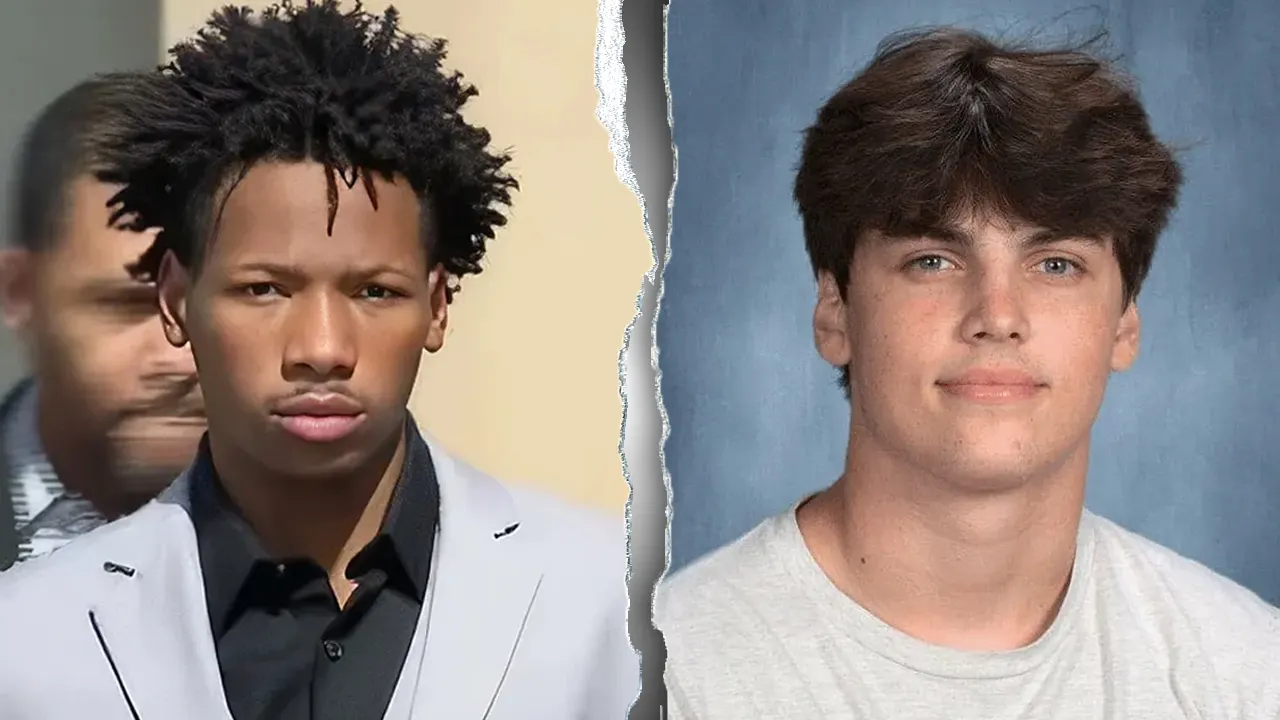
karmelo anthony case begins not with a gavel strike but with a quieter sound—the hum of a courthouse hallway where the air feels older than the paint, where names echo longer than footsteps. On some mornings, the benches fill early; on others, they remain half-empty, waiting for a story to decide how it will be remembered. The case’s gravity isn’t just legal. It’s atmospheric—felt in the pauses between headlines, in the careful phrasing of motions, in the way a name becomes shorthand for something larger than a single life.
How the Story Took Shape
The origins of the karmelo anthony case are best understood as an intersection rather than a single spark—law enforcement procedure meeting prosecutorial discretion, media framing meeting public expectation. In the United States, cases acquire momentum through process: arrest, charging, hearings, filings. Each step is ordinary in isolation. Together, they form a narrative that can tilt public opinion long before a verdict. The mechanics of that process—due process, evidentiary standards, and the presumption of innocence—are foundational to American law, yet they are often least visible when emotions run highest (see an overview of due process on Wikipedia: karmelo anthony case).
What makes this case linger in conversation is not merely what happened, but how it has been interpreted. Legal filings are technical by design; public memory is not. The distance between the two is where misunderstanding grows.
A Case in Motion
Over time, the karmelo anthony case evolved as cases often do: arguments refined, timelines clarified, and competing narratives hardened. Court calendars reshuffle; motions narrow the field. Meanwhile, the public story—filtered through social platforms and secondary commentary—can move faster than the law allows. This divergence is not unique. Scholars of criminal justice have long noted how pretrial narratives can calcify, shaping expectations that the courtroom itself must then carefully dismantle or confirm (for broader context, see Britannica’s criminal procedure overview: karmelo anthony case).
Meaning Beyond the Docket
Every high-profile case accrues symbolism. The karmelo anthony case has come to represent questions that recur across generations: How much faith should we place in institutions? What happens when identity, perception, and proof collide? These questions are not abstract. They surface whenever a case appears to test the balance between public safety and individual rights—a balance embedded in constitutional design but continually renegotiated in practice (U.S. Department of Justice on the justice system: karmelo anthony case).
Why It Matters Now
Modern relevance is less about novelty than timing. In an era saturated with information, the velocity of judgment has increased. The karmelo anthony case matters because it unfolds within this climate—where clips circulate faster than context, and where legal nuance struggles to compete with certainty. The case’s resonance speaks to a broader anxiety about whether truth can still travel at the speed of law.
[IMAGE PLACEMENT: A quiet city street outside a courthouse, evening traffic blurred]
Context and Comparison
Comparatively, the case echoes other moments when individual trials became proxies for systemic debate. History offers parallels—not as equivalence, but as caution—reminding us that outcomes are shaped as much by patience as by passion (see Wikipedia’s overview of the criminal justice system: karmelo anthony case).
A Conversation at the Margins of the Court
I spoke with a legal analyst on a rainy afternoon, the café window fogged from the inside.
Q: What do people misunderstand most about cases like this?
A: “That silence means certainty. In law, silence often means restraint.”
Q: And the public narrative?
A: “It wants resolution before the process can give it.”
Q: What should readers hold onto?
A: “The idea that complexity isn’t avoidance—it’s responsibility.”
FAQs
Is the case resolved?
Legal timelines vary; resolution depends on court proceedings rather than public timelines.
Why does it receive so much attention?
Because it intersects law, media, and public trust.
What should readers be cautious about?
Separating verified court records from speculation.
Where can I learn more about the legal process?
Authoritative overviews include due process and criminal procedure resources cited above.
Closing Reflections
The karmelo anthony case will eventually reach an endpoint, as all cases do. But its afterlife—how it is remembered, cited, and felt—will depend on whether we allow complexity to coexist with conviction. In that sense, the case is less a conclusion than a question posed to us: Can we wait long enough for the truth to arrive whole?
Read more: Ainsley Earhardt and the Quiet Architecture of American Morning Television